Clover Hay For Sale
Clover Hay For Sale provides livestock producers, horse owners, farmers and agricultural buyers with an opportunity to source a legume-based forage for a variety of feeding programs. Clover can provide useful levels of protein, minerals and digestible nutrients, although the actual feeding value of baled forage depends on species, maturity, harvesting conditions, storage and overall quality.
For commercial buyers, evaluating forage based on a laboratory analysis rather than appearance alone can help determine whether a particular lot is appropriate for the intended animals. Clover Hay For Sale
Clover Hay For Sale
Clover forage can be harvested and preserved as hay when weather and drying conditions allow. The nutritional composition can vary considerably depending on plant maturity at harvest. Generally, younger and leafier forage tends to provide greater nutritional value than more mature material. Buy Orchard Grass Hay for Horses
Forage quality also depends on how the crop is handled after cutting. Excessive rain during curing can cause leaf loss and nutrient deterioration, while inadequate drying can increase the risk of heating and spoilage. Proper baling and storage are therefore important considerations for commercial buyers.
A forage analysis can provide useful measurements such as crude protein, neutral detergent fiber (NDF), acid detergent fiber (ADF), moisture and energy-related values. University of Minnesota Extension recommends forage testing as a way to obtain objective information about hay quality and match available forage to livestock requirements. https://www.ranchworldads.com/
Forage for Livestock
Clover-based forage may be incorporated into feeding programs for cattle, sheep, goats, horses and other livestock, depending on the specific forage analysis and animal requirements. Different classes of livestock have different nutritional needs, so the same hay may not be appropriate at the same feeding rate for every animal.
For horses, forage selection should take into account maturity, nutrient concentration and the animal’s age, workload and health requirements. For beef cattle and other ruminants, the forage should be considered alongside pasture, grain, minerals and other components of the total ration.
Quality and Storage
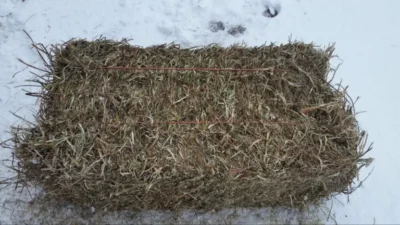
When purchasing baled forage, buyers should inspect the product for excessive dust, mold, weeds, foreign materials and signs of weather damage. Color and aroma can provide useful visual clues, but they should not replace laboratory analysis.
Storage is equally important. Bales should be kept in a dry location and protected from excessive moisture. Where possible, keeping bales off the ground can help reduce moisture absorption and quality losses.
Buying Commercial Forage
When searching for Clover Hay For Sale, prospective buyers should confirm bale dimensions, approximate bale weight, cutting date, moisture condition, available forage analysis and storage history. Larger agricultural orders should also include clear arrangements for quantity, transportation and delivery.
For farmers and livestock owners, high-quality legume forage can be a valuable component of a balanced feeding strategy. However, feeding rates should be based on the nutritional needs of the animals and the actual analysis of the hay.
Whether purchasing for a small livestock operation or a commercial farm, choosing clean, properly cured and appropriately stored forage can help improve feed-management efficiency. Buyers should request current product information and professional nutritional advice where necessary before making large purchases. Follow Us On Facebook