Triticale Hay for Sale
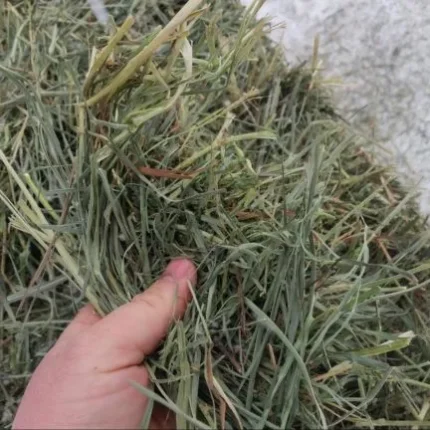
Triticale Hay for Sale is an excellent source of nutrition for animals, providing them with high levels of protein and other essential nutrients. Triticale is a great way to buy in bulk and save money, as it is cheaper than most other types of feed. Triticale helps to keep animals healthy and happy, while the wrapped bales make it easy to store and transport.
Triticale Hay for Sale
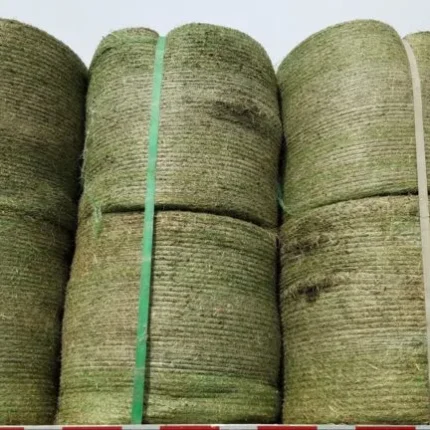
Triticale Wrapped Forage Large Square
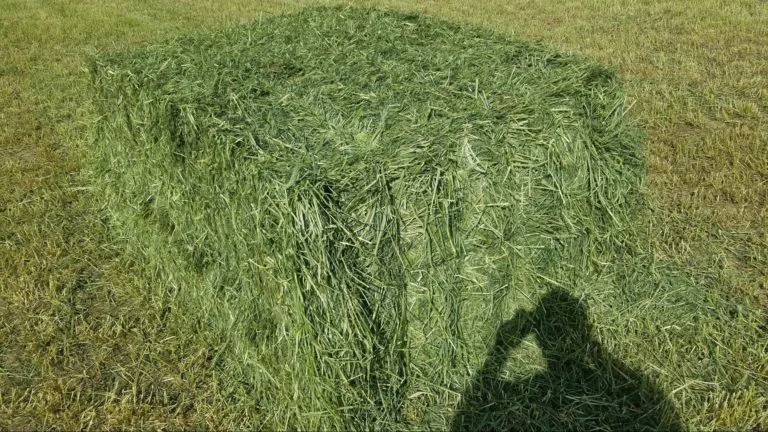
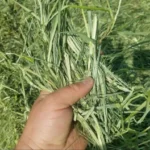
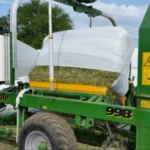
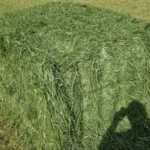
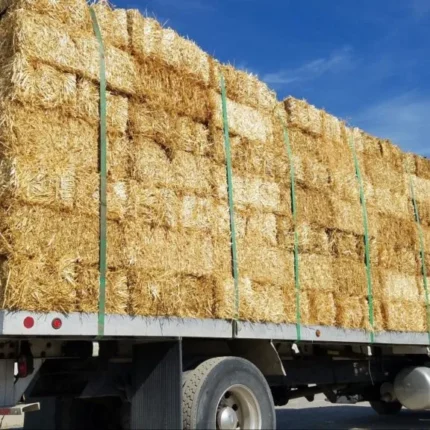
Triticale cut early just at flag leaf stage and bailed high density in 3×4 bales then wrapped with 10 layers of plastic to keep all air out. We dry it for 3 days to get the moisture down as low as possible before bailing. Because of the density of the bale and the many layers of wrap we are sure each bale keeps exceptionally well having no mold or black spots under the plastic. This makes excellent cow feed for milking cows or as an additive to a TMR. Bales flake apart very well and are processed for feeding. Weight is around 1500lb per bale. Triticale
 ;
Triticale Hay for Sale
Triticale hay is a practical cereal forage option for livestock producers looking for dependable conserved feed with useful energy and fibre characteristics. Produced from triticale, a cereal developed from crosses between wheat and rye, this forage combines characteristics of both parent crops and can perform across a range of growing environments. Agriculture Victoria notes that triticale is adapted to a wide range of soils and environments and is well established as an ingredient in livestock rations.
For buyers, selecting quality hay involves more than choosing a crop name. Harvest maturity, leaf retention, curing, bale moisture, storage conditions and laboratory analysis can all influence the feeding value of the finished product. When comparing different lots, a representative feed test can provide useful information about energy, protein and fibre, helping livestock owners match the forage with their animals’ requirements.
Triticale Hay for Sale
Quality starts in the paddock. The stage at which a cereal crop is harvested has a significant effect on the balance between yield and nutritional value. Agriculture Victoria identifies the boot stage as an important point for balancing cereal forage yield and quality, while feed quality generally declines as plants become more reproductive and develop greater proportions of head and stem material.
This makes harvest timing an important consideration when purchasing cereal hay. A well-managed crop harvested at an appropriate stage can provide a useful source of conserved forage for feeding programs where consistent fibre and energy supply are required.
Buyers should also consider whether the product is intended for maintenance animals, growing stock, breeding livestock or higher-demand production systems. Different animals have different nutritional requirements, so the best purchasing decision depends on the actual analysis of the forage rather than the crop name alone.
Quality and Nutritional Value
The nutritional value of cereal hay can vary considerably between crops. Growing conditions, soil fertility, rainfall, temperature, harvest date and curing practices can all affect the final product.
A feed analysis is therefore valuable when purchasing larger quantities. Agriculture Victoria recommends feed testing when comparing fodder price and quality because testing provides information about important characteristics such as energy and protein. Fibre is also important because it can influence how much forage livestock are able to consume.
For commercial buyers, useful test information may include:
- Dry matter
- Crude protein
- Metabolisable energy
- Neutral detergent fibre
- Acid detergent fibre
- Mineral information where appropriate
- Moisture
- Other relevant quality or safety measurements
Rather than relying solely on colour or appearance, buyers can use these measurements alongside physical inspection to make more informed purchasing decisions.
Forage Cereal Harvesting
Harvest management has a direct effect on the quality of conserved forage. Agriculture Victoria identifies several factors that should be considered when harvesting forage cereals, including the intended end use, weather conditions, soil moisture, available machinery and the desired dry matter yield.
Triticale can be harvested at different stages depending on the intended feeding or conservation system. For forage-cereal systems, the flag-leaf or boot stage and the soft-dough stage represent important harvest windows. The appropriate choice depends on whether the objective is to prioritise forage quality, dry matter yield, conservation requirements or the production system in which the feed will be used.
For buyers, understanding the harvest stage can help explain differences between lots. Earlier-cut forage may have a different nutritional profile from later-cut material, while later harvests can provide greater dry matter yield but may contain more mature structural material.
Triticale Hay Bales
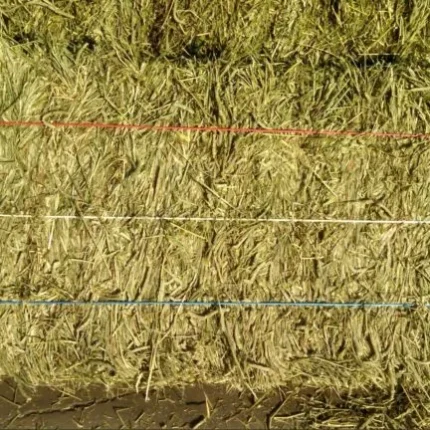
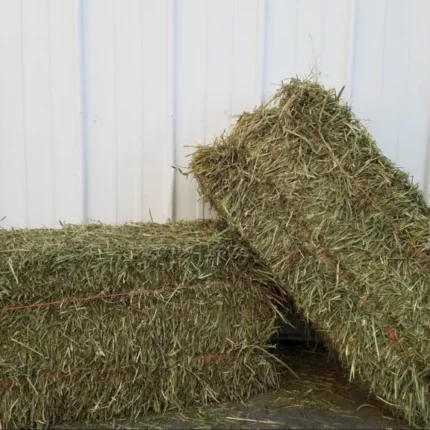
Bale quality is influenced by the way forage is cured and baled. Hay needs to be sufficiently dry before baling to minimise heating, mould and storage problems. Agriculture Victoria provides different moisture recommendations according to bale type, with large square bales requiring particularly careful moisture management because their density can restrict air movement.
When purchasing bales, inspect them for:
- Consistent colour and texture
- Excessive dust
- Visible mould
- Unusual heating or musty odours
- Weather damage
- Excessive foreign material
- Appropriate bale density
- Secure twine or wrapping
The outside of a bale does not always tell the complete story. Where possible, buyers should inspect representative bales from different parts of the lot and obtain a feed analysis.
Bulk Supply Options
Bulk purchasing can be useful for farms, livestock operations, feed merchants and commercial buyers that require regular forage supplies. Larger orders may improve transport efficiency and help establish a more consistent feeding inventory.
However, bulk purchasing should not mean compromising on quality information. Before ordering a large quantity, confirm the approximate harvest date, bale type, storage history, feed-test results and any available vendor documentation.
For larger commercial purchases, it is also sensible to confirm whether the hay comes from a single production lot or multiple paddocks and harvests. A consistent lot makes nutritional planning easier because the forage characteristics are more predictable.
For Livestock Feeding
Cereal forage can form part of feeding programs for different livestock classes, provided its nutritional characteristics are suitable for the animals receiving it.
Triticale itself is already used in livestock diets, with Agriculture Victoria describing the grain as an energy source containing moderate protein and high starch and carbohydrate levels. When the crop is conserved as forage, however, its feeding value depends heavily on harvest maturity and conservation quality.
For cattle, the forage may be incorporated into maintenance, growth or production rations according to its analysed nutritional profile.
For sheep and other ruminants, it can provide fibre and energy as part of a balanced ration.
For horses, forage selection should be based on the individual animal’s nutritional requirements, physical condition, workload and other feeds being provided. A forage suitable for one animal may not necessarily be appropriate for another.
A qualified nutritionist or veterinarian can help formulate rations where animals have specific production or health requirements.
Feed Testing
Feed testing is one of the most useful steps when purchasing hay commercially. Appearance can provide clues about harvesting and storage, but laboratory analysis gives a much clearer picture of nutritional characteristics.
Agriculture Victoria states that properly conducted feed tests are the way to determine what is actually being supplied and whether the fodder is likely to meet livestock requirements.
For a commercial purchase, ask for an analysis that represents the actual lot being supplied. If a supplier provides an older analysis, confirm whether the sample represents the current crop and bale batch.
Testing becomes particularly important when purchasing large volumes because even relatively small differences in nutritional quality can affect ration formulation and overall feed costs.
Storage and Handling
Good storage helps preserve the quality of hay after it has been harvested. Agriculture Victoria recommends storing hay under cover and protecting it from weather exposure. Square bales can also be efficient to store and transport because of their weight density.
Poor storage can result in moisture penetration, mold development, weathering and dry-matter losses. Bale stacks should therefore be positioned where drainage is good and exposure to rain is minimized.
Buyers receiving a large shipment should also have a suitable storage area prepared before delivery. Keeping hay protected after purchase is just as important as buying a well-made product in the first place. Visit Our Facebook Page
Choosing a Reliable Supplier
A dependable supplier should be able to provide clear information about the forage being offered. When comparing suppliers, consider the following:
Crop origin: Ask where the forage was grown and whether the lot is from a consistent production area.
Harvest stage: Understanding when the crop was cut can help explain differences in nutritional value.
Feed analysis: Request current laboratory results for the actual product where available.
Bale specifications: Confirm bale dimensions, approximate weight and bale type.
Storage: Ask how the hay has been stored since baling.
Delivery: Confirm delivery areas, quantities, transport arrangements and unloading requirements.
Documentation: Commercial buyers may require appropriate feed or vendor declarations depending on their location and intended use.
Agriculture Victoria notes that buyers may request feed-test results and vendor declarations when hay is marketed for livestock use.
Delivery and Commercial Purchasing
Reliable delivery is an important consideration when purchasing hay in bulk. Transport costs can have a meaningful impact on the delivered price, particularly when purchasing from a distant supplier.
Before confirming an order, establish the number of bales, bale format, approximate weight, delivery location and unloading requirements. It is also useful to confirm whether delivery is arranged by the supplier or an independent carrier.
Commercial buyers should calculate the delivered cost rather than comparing the advertised bale price alone. A slightly different bale price can become more or less competitive after freight, handling and storage requirements are included.
Why Harvest Timing Matters
Harvest timing remains one of the most important factors affecting cereal forage quality. Agriculture Victoria explains that cereal forage quality can decline after plants become reproductive because increasing amounts of head and stem material are less digestible.
At the same time, delaying harvest can increase total dry matter yield. This creates an important management balance between quantity and quality.
For buyers, this means two visually https://www.ranchworldads.com/ similar loads may have different nutritional characteristics. A feed test helps identify those differences and provides more useful information than relying exclusively on colour, bale size or crop name.
Weather and Curing Considerations
Weather during haymaking can significantly influence the finished product. Rain can delay curing and increase the risk of quality deterioration. Hay must reach appropriate moisture levels before baling to reduce the likelihood of heating and other storage problems.
Weather-affected crops should receive additional attention. Agriculture Victoria recommends feed analysis for weather-affected forage crops so that their quality can be properly assessed before ration formulation.
This is particularly relevant when buying clearance, salvage or end-of-season hay. A lower purchase price does not necessarily represent better value if the forage has substantially reduced nutritional quality.
Buying Triticale Hay for Sale
When comparing available forage, look beyond the headline product name. A quality purchasing checklist should include:
- Current feed-test results.
- Harvest stage and approximate harvest date.
- Bale type and size.
- Moisture and curing quality.
- Storage conditions.
- Visible cleanliness and physical condition.
- Supplier documentation.
- Delivered cost.
- Quantity available.
- Suitability for the intended livestock.
This approach allows buyers to compare forage on measurable characteristics rather than appearance alone.
A Practical Forage Choice
Triticale offers a flexible cereal-crop option with established agricultural and livestock applications. Its adaptability across different soil environments and its role in livestock feeding make it a useful crop for producers seeking alternative cereal forage sources.
For hay buyers, the most important consideration is the quality of the individual lot. Harvest maturity, curing, bale moisture, storage and nutritional analysis all contribute to the final value of the product.
Whether purchasing a few bales for a small livestock operation or arranging a bulk commercial order, choosing properly tested and well-stored forage can support more predictable feeding decisions.
Conclusion
Triticale hay can be a valuable source of conserved cereal forage when it is harvested, cured, tested and stored correctly. Its usefulness comes from the combination of cereal forage characteristics and the flexibility of triticale as an agricultural crop.
For customers comparing suppliers, focus on measurable quality, reliable documentation, appropriate bale specifications and total delivered cost. A representative feed test is particularly valuable because it provides information about energy, protein and fibre that cannot be determined reliably from appearance alone.
With careful supplier selection and proper storage, this forage can become a practical component of feeding programs for livestock operations seeking dependable conserved feed.
Reviews
There are no reviews yet.