Blog
Buy Alfalfa-Grass Hay for Horses

Buy Alfalfa-Grass Hay for Horses: A Guide to Choosing the Right Mixed Hay
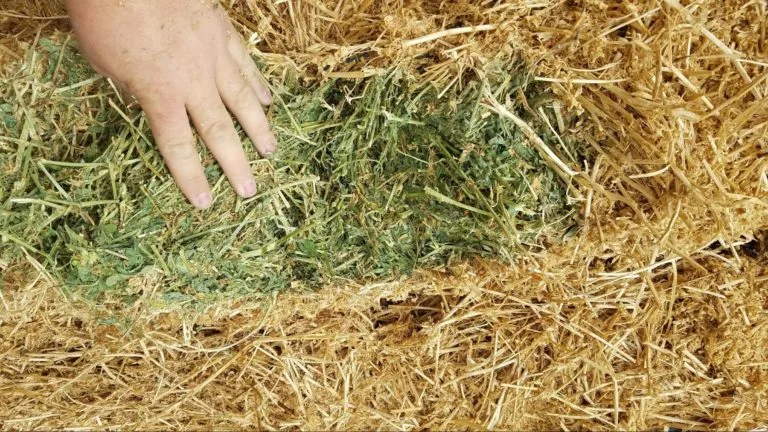
If you’re looking to buy alfalfa-grass hay for horses, you’re likely searching for a forage that combines characteristics of grass hay with alfalfa rather than feeding either forage exclusively.
Alfalfa-grass mixes are widely used in horse feeding programs and can be particularly attractive to horse owners, boarding facilities, breeders and equine operations that want a mixed forage.
Mayford Hay offers Alfalfa/Grass Mix Hay alongside straight Alfalfa Hay and several grass hay varieties.
Browse Mayford’s available horse hay and forage products to compare current options.
What Is Alfalfa-Grass Hay?
Alfalfa-grass hay combines a legume—alfalfa—with grass forage.
The exact characteristics of the hay depend on several factors, including:
- The type of grass in the mixture
- The proportion of alfalfa to grass
- Plant maturity at harvest
- Growing conditions
- Harvest timing
- Storage
That’s why two bales both described as “alfalfa-grass hay” can have different nutritional characteristics.
Why Is Alfalfa-Grass Mix Popular for Horses?
Horse owners often compare straight grass hay, straight alfalfa and mixtures of the two.
A mixed hay can provide a practical middle ground for some feeding programs, combining characteristics of both forage types.
But the appropriate hay still depends on the individual horse.
Consider factors such as:
- Age
- Body weight
- Workload
- Growth
- Pregnancy or lactation
- Body condition
- Pasture access
- Other feeds in the diet
If you’re comparing forage products, Mayford carries both Alfalfa/Grass Mix Hay and straight Alfalfa Hay.
Compare Mayford’s available alfalfa and grass hay products.
Alfalfa-Grass Mix vs. Straight Alfalfa for Horses
Straight alfalfa generally has a different nutrient profile from grass hay, including higher average protein and calcium concentrations.
That can make alfalfa useful in feeding programs for horses with higher nutritional demands.
However, not every horse requires the same nutrient density.
An alfalfa-grass mix gives buyers another option when they don’t necessarily want to feed straight alfalfa as their primary hay.
Mayford offers both products, allowing buyers to compare Alfalfa Hay with Alfalfa/Grass Mix Hay before ordering.
Alfalfa-Grass Hay vs. Orchard Grass Hay
Another common comparison is alfalfa-grass hay vs. Orchard Grass hay.
Orchard grass is a cool-season grass hay, whereas an alfalfa-grass mix incorporates a legume component.
Which one is appropriate depends on the nutritional requirements of the horse and the actual analysis of the forage.
Mayford’s hay selection includes Orchard Grass as well as alfalfa products, giving equine buyers multiple forage options.
Browse Mayford’s complete hay selection to compare available forage.
Alfalfa-Grass Hay for Performance Horses
Performance horses can have higher energy and nutrient requirements than horses doing little or no work.
For these animals, forage quality becomes particularly important because hay represents a significant portion of the diet.
Rather than assuming that a particular hay name guarantees the required nutrition, use forage analysis alongside the horse’s workload, body condition and complete feeding program.
Alfalfa-Grass Hay for Boarding Facilities
A boarding stable may feed dozens of horses every day, making forage purchasing one of its largest recurring operational needs.
For these businesses, buying hay in bulk can provide several advantages:
- More predictable inventory
- Fewer emergency hay purchases
- Easier budgeting
- Scheduled deliveries
- More consistent forage between purchases
If you’re buying for a boarding facility, ask the supplier whether sufficient quantities are available to support repeat orders.
How Much Alfalfa-Grass Hay Should You Buy?
Start by calculating your approximate daily hay usage.
For example, suppose an equine facility has 30 horses and estimates an average of 20 pounds of hay per horse per day.
30 × 20 = 600 pounds per day
Over 30 days:
600 × 30 = 18,000 pounds
That’s approximately 9 tons per month before accounting for waste.
Actual consumption varies based on body weight, pasture availability, workload, forage quality and other components of the diet.
Should You Buy Horse Hay by the Bale or Ton?
For one or two horses, thinking in terms of individual bales may be practical.
For a stable, ranch or equestrian center, calculating requirements by weight can provide a clearer picture of actual costs.
Don’t assume that every bale weighs the same.
Ask for the average bale weight and calculate the price per pound or ton.
For larger purchases, also consider the delivered cost rather than simply the advertised hay price.
What Should Quality Horse Hay Look Like?
Regardless of whether you buy alfalfa, grass hay or an alfalfa-grass mix, quality matters.
Look for hay that is:
- Clean
- Properly cured
- Free from visible mold
- Low in dust
- Free from harmful foreign material
- Stored appropriately
- Suitable in maturity for the intended horses
Color can provide some useful information, but it should never be your only measure of hay quality.
Ask for a Forage Analysis When Buying in Bulk
Forage analysis becomes increasingly valuable as your purchase gets larger.
If a commercial stable purchases several tons at once, understanding the nutritional characteristics of the hay can help with feeding decisions.
A forage analysis may include information about protein, fiber, energy, moisture and minerals.
This allows you to evaluate the actual forage rather than relying on assumptions based on appearance or species.
How to Store Alfalfa-Grass Hay
Bulk hay requires adequate storage.
Before ordering, make sure you have enough protected space for the quantity you’re purchasing.
Good storage practices include:
- Keeping hay protected from rain
- Reducing exposure to ground moisture
- Maintaining adequate ventilation
- Keeping the storage area dry
- Inspecting hay periodically
- Managing inventory so older hay is used appropriately
Questions to Ask Before Buying Alfalfa-Grass Hay
- What is the approximate alfalfa-to-grass composition?
- What type of grass is included?
- What cutting is currently available?
- What is the average bale weight?
- What bale sizes are available?
- Is forage analysis available?
- How has the hay been stored?
- What quantity can be supplied?
- What is the delivered price?
- Can you supply repeat orders?
Other Horse Hay Options to Compare
Alfalfa-grass mix isn’t the only option available to horse owners.
Depending on your horse’s requirements, you may also want to compare:
- Alfalfa Hay
- Orchard Grass Hay
- Timothy Hay
- Coastal Bermuda Hay
- Oat Hay
Mayford carries a broad range of forage products, making it easier to compare several hay types before purchasing.
Explore Mayford’s available hay products to compare forage options for your horses.
Buy Alfalfa-Grass Hay From Mayford Hay
If you’re searching for alfalfa-grass hay for sale, Mayford offers Alfalfa/Grass Mix Hay as part of its broader agricultural forage selection.
For horse farms, boarding facilities and other high-volume buyers, determine your approximate monthly usage before requesting pricing.
Providing your required tonnage, bale preference, delivery location and desired delivery schedule makes it easier to discuss a suitable bulk order.
Ready to Buy Alfalfa-Grass Hay for Horses?
Whether you’re feeding a few horses or purchasing forage for an entire equine facility, start by choosing hay based on quality, nutritional requirements and total delivered value—not simply the lowest bale price.
Need alfalfa-grass hay in bulk? Browse Mayford Hay’s current forage selection and contact Mayford about availability, bulk quantities and delivery.