

Blog
Buy Agricultural Fertilizer in Bulk: Choosing the Right Fertilizer

When you’re ready to buy agricultural fertilizer in bulk, the biggest mistake is choosing a product simply because it has the largest numbers on the bag.
Farmers and agricultural operators need to match the fertilizer formulation to the nutrient requirements of the soil and crop.
Mayford Hay supplies a range of agricultural fertilizers, including 0-45-0 Triple Superphosphate, 18-46-0 DAP, 19-19-19, 20-10-10, 4-0-8 liquid fertilizer, slow-release fertilizers and UAN liquid nitrogen fertilizer.
With multiple formulations available, buyers can compare products based on their nutrient requirements, application method and farming system.
Where to Buy Agricultural Fertilizer in Bulk
Buying fertilizer in larger quantities can be practical for farms, hay producers, ranches, commercial growers and agricultural businesses that have recurring nutrient requirements.
However, bulk fertilizer purchasing requires more planning than simply ordering a ton sack.
Before purchasing, consider:
- Soil test results
- Crop requirements
- Fertilizer analysis
- Application rate
- Available equipment
- Storage
- Transportation
- Total delivered cost
Mayford’s current catalog includes several ton-sack fertilizer products as well as liquid fertilizer options.
Understand the Fertilizer Analysis First
The three numbers printed on a fertilizer product represent its conventional N-P-K analysis:
Nitrogen – Phosphate – Potash
For example:
19-19-19
is a fertilizer containing equal labeled percentages of nitrogen, phosphate and potash.
By contrast:
0-45-0
contains no nitrogen or potash according to the guaranteed analysis and is primarily a phosphorus fertilizer.
Understanding these numbers helps you compare agricultural fertilizer products before purchasing.
0-45-0 Triple Superphosphate
Mayford offers 0-45-0 Triple Superphosphate in a ton sack.
This formulation provides phosphorus without supplying nitrogen or potassium according to its labeled analysis.
That can be useful when soil testing and crop requirements indicate that phosphorus is needed without additional nitrogen or potassium.
For producers managing hay fields or other agricultural land, the application rate should be based on soil test results and agronomic recommendations.
18-46-0 DAP Fertilizer
Mayford also supplies 18-46-0 DAP in a ton sack.
DAP, or diammonium phosphate, is a widely used fertilizer formulation providing both nitrogen and phosphorus.
The 18-46-0 analysis makes it different from 0-45-0 because it supplies nitrogen as well as phosphorus.
The correct choice between these formulations depends on what the soil and crop require.
19-19-19 Fertilizer
Mayford’s catalog includes 19-19-19 fertilizer in a ton sack.
This balanced formulation supplies nitrogen, phosphate and potash.
A balanced fertilizer may be appropriate when soil conditions and crop requirements indicate that all three primary nutrients are needed.
However, farmers should not assume that a balanced fertilizer is automatically the best choice.
A soil test remains one of the most useful tools for determining nutrient requirements.
20-10-10 Fertilizer
Mayford also lists 20-10-10 fertilizer in a ton sack.
Compared with 19-19-19, this formulation has a higher nitrogen number relative to its phosphate and potash numbers.
That difference can matter when selecting fertilizer for a specific fertility program.
Again, the correct application depends on soil nutrient levels, crop requirements and professional recommendations.
UAN Liquid Nitrogen Fertilizer
For operations that prefer liquid fertilizer applications, Mayford lists UAN Liquid Nitrogen Fertilizer in a ton quantity.
Liquid fertilizer can require different handling, storage and application equipment compared with granular fertilizer.
Before ordering liquid fertilizer, make sure your farm has the appropriate storage and application infrastructure.
4-0-8 Liquid Fertilizer
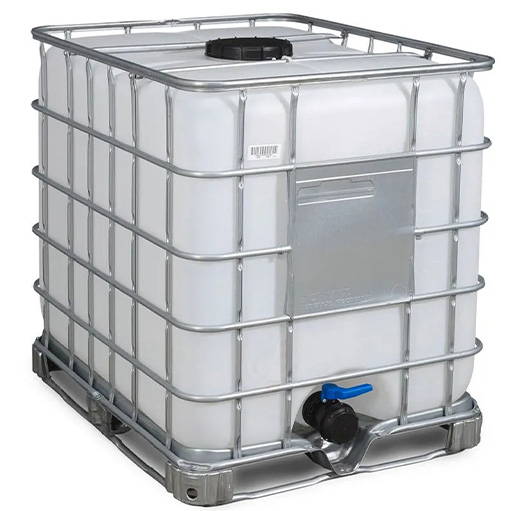
Mayford also offers 4-0-8 Liquid Fertilizer in a tote.
This formulation supplies nitrogen and potash according to its labeled analysis, without a listed phosphate component.
As with every fertilizer product, the formulation should be selected based on the actual nutrient requirements of the field.
Slow-Release Fertilizer
Mayford’s fertilizer catalog also includes slow-release formulations such as:
- 14-14-14 3–4 Month Slow Release
- 15-9-12 3–4 Month Slow Release
Slow-release fertilizers are designed to make nutrients available over an extended period rather than releasing them all immediately.
Their use can be appropriate in situations where a longer nutrient-release period fits the crop and management program.
Always follow the manufacturer’s application instructions.
Why Buy Fertilizer in Bulk?
There are several reasons agricultural producers may choose bulk fertilizer.
1. Farm-Scale Applications
Larger farms can require significant quantities of fertilizer, making smaller retail packages impractical.
2. Planned Nutrient Management
If you have a clear fertility plan for the season, purchasing the required quantity in advance can simplify procurement.
3. Reduced Reordering
Maintaining an adequate fertilizer inventory can reduce the need for repeated purchases during critical application periods.
4. Better Purchasing Planning
Bulk orders make it easier to calculate the actual cost of fertilizing a specific acreage.
However, fertilizer should only be purchased in quantities that can be stored safely and used within the appropriate period.
Don’t Choose Fertilizer Without a Soil Test
One of the most important principles of fertilizer purchasing is simple:
Know what your soil needs before deciding what fertilizer to buy.
A soil test can provide useful information about nutrient availability and help identify where fertilizer applications may be appropriate.
Without a soil test, producers may apply nutrients that are already sufficient while failing to address another nutrient requirement.
This can increase costs without necessarily improving crop performance.
Fertilizer for Hay Fields
Hay fields deserve special consideration because harvesting removes nutrients from the field.
When forage is cut, baled and removed, nutrients contained in the harvested crop leave the field.
Over multiple harvests, this can influence soil fertility.
A properly designed fertilizer program can therefore be an important part of maintaining productive hay acreage.
The correct program depends on:
- Hay type
- Soil fertility
- Yield target
- Number of cuttings
- Previous fertilizer applications
- Manure applications
- Weather
- Irrigation
- Soil pH
How Much Fertilizer Should You Buy?
Start with the acreage you intend to fertilize.
For example, if your agronomist recommends a specific application rate per acre, multiply that rate by the number of acres requiring treatment.
Then compare the result with the product’s nutrient analysis and packaging.
For a large farm, this calculation can quickly translate into several tons of fertilizer.
Do not simply order a ton sack because the product is sold that way. Calculate the actual nutrient requirement first.
Granular vs. Liquid Fertilizer
The choice between granular and liquid fertilizer depends partly on your farm’s equipment and management system.
Granular Fertilizer
Granular products are commonly purchased in bags or larger sacks and can be handled with appropriate spreading equipment.
Mayford lists several ton-sack fertilizer products, including 0-45-0, 18-46-0, 19-19-19 and 20-10-10.
Liquid Fertilizer
Liquid fertilizer can be applied using specialized equipment and may require suitable tanks, pumps and handling systems.
Mayford lists both UAN liquid nitrogen fertilizer and 4-0-8 liquid fertilizer.
The best choice is the one that fits your agronomic requirements and farm infrastructure.
What to Ask Before Ordering Bulk Fertilizer
Before placing a large fertilizer order, ask:
- What is the exact fertilizer analysis?
- What package or quantity is available?
- Is the product granular or liquid?
- What is the recommended application rate?
- What are the current storage requirements?
- What equipment is needed for application?
- What is the delivered cost?
- What delivery options are available?
- Is the product currently in stock?
- What quantity can be supplied?
These questions can help prevent costly purchasing mistakes.
Calculate Delivered Fertilizer Cost
The advertised fertilizer price isn’t necessarily your final cost.
For bulk agricultural fertilizer, consider:
Product price + delivery + handling + storage requirements = total acquisition cost
Mayford states on its website that its prices include delivery to the customer’s forage and that orders are dispatched from the USA.
The company’s stated delivery window is approximately 3–5 days within the USA and 15–20 days worldwide.
Because delivery conditions and availability can change, buyers should confirm current shipping information when placing an order.
Why Buy Fertilizer From Mayford Hay?
Mayford Hay isn’t limited to a single fertilizer formulation.
Its current agricultural product range includes:
- 0-45-0 Triple Superphosphate
- 18-46-0 DAP
- 19-19-19
- 20-10-10
- 4-0-8 Liquid Fertilizer
- UAN Liquid Nitrogen Fertilizer
- Slow Release 14-14-14
- Slow Release 15-9-12
This range allows agricultural buyers to compare different nutrient formulations according to their fertility programs.
Mayford also supplies hay and cattle products, allowing producers to source multiple agricultural products from the same supplier.
Buy Agricultural Fertilizer for Your Farm
Whether you need phosphorus fertilizer, DAP, balanced NPK fertilizer, nitrogen fertilizer, liquid fertilizer or slow-release fertilizer, start with the nutrient requirements of your soil and crop.
Then select the formulation that provides the nutrients you actually need.
Mayford Hay’s current fertilizer catalog provides several options for agricultural operations purchasing fertilizer in larger quantities.
Ready to purchase? Browse Mayford Hay’s fertilizer products or contact the team for current availability, pricing, quantities and delivery information.